Subscribe to updates
You'll receive weekly summaries about West Northamptonshire Council every week.
If you have any requests or comments please let us know at community@opencouncil.network. We can also provide custom updates on particular topics across councils.
Summary
Open Council Network is an independent organisation. We report on West Northamptonshire and are not the council. About us
The Council meeting scheduled for 13 July 2026 was set to cover a range of significant topics, including the council's annual report, financial outturn for the previous year, and proposed changes to the council's constitution. Additionally, several motions were scheduled for discussion, addressing issues such as business rates, pavement parking, housing policies, support for disabled people, and the impact of government planning reforms.
Opposition Priority Business: Business Rates and High Street Support
Councillor Daniel Lister, proposed by Councillor Peter Matten, put forward a motion concerning business rates. The motion highlighted that business rates are a significant fixed cost for retail, hospitality, and leisure businesses, posing a challenge for high streets competing with online commerce and out-of-town retail parks. West Northamptonshire has four town centres and numerous village high streets that provide essential services and local employment. The motion noted that government reforms from April 2026, including a revaluation of non-domestic properties, have led to varying outcomes, and many businesses may be unaware of available reliefs or how to challenge rateable values.
The motion outlined several points for the Council to note, including the importance of town centres and local commercial centres, the government's introduction of a new five-tier business rates multiplier system, and the availability of pubs and live music venues relief. It also highlighted the council's existing discretionary powers under section 47 of the Local Government Finance Act 1988 to support economic growth and town centre vitality, and the potential use of Community Infrastructure Levy and section 106 receipts for improvements. The motion also noted the national vacancy rate of high street units and the council's powers under the High Street Rental Auctions framework.
The Council was asked to believe that thriving town centres are the social and economic heart of communities, that eligible businesses should be aware of and able to access entitled reliefs, and that businesses facing bill increases deserve clear information. It also stated that communities experiencing significant housing growth have a reasonable expectation that developer contributions will be reinvested in their commercial environments.
The motion therefore resolved to request a written statement from the relevant Cabinet Member on the adoption of the pubs and live music venues relief, commission a report on Supporting Small Business Relief awards, review and improve communications with businesses about the 2026 changes, bring a report to cabinet on options for a Local Discounts and Incentives policy, develop a proposal for a West Northamptonshire High Street Business Support Programme, ensure town centres are priority locations in Community Infrastructure Levy allocation decisions, provide a written update on the implementation of High Street Rental Auctions powers, and request the Leader of the Council write to the Chancellor of the Exchequer pressing for a permanent reduction in business rates.
Motion 1: Pavement Parking Prohibition
Proposed by Councillor Andy Kilbride and seconded by Councillor Phil Bignell, this motion addressed the English Devolution and Community Empowerment Act 2026, which enables local transport authorities to prohibit the parking of motor vehicles on footways and verges. The government has committed to bringing forward secondary legislation to enable civil enforcement officers to enforce against unnecessary obstruction of the pavement, with full rollout expected by the end of 2026. Pavement parking remains legal across most of England outside London, leaving local authorities with limited tools to act against it until the secondary legislation is in force.
The motion noted that the new legislative framework allows for exceptions where local circumstances make pavement parking necessary, particularly in villages with historic street layouts and no off-street parking. Research by the RAC indicates that 83% of drivers support action on pavement parking, provided sensible exemptions are made.
The Council was asked to believe that pavement parking is dangerous, obstructive, and unfair to pedestrians, particularly vulnerable groups, and that the new legislative framework is long overdue. It was also believed that West Northamptonshire must be ready to act promptly once the secondary legislation is in force.
The motion therefore resolved to welcome the provisions of the Act, support the government's intention to introduce civil enforcement powers, request a report on how the authority should prepare for these new powers, ask officers to begin preparatory work immediately, and request the Leader of the Council write to the Secretary of State for Transport.
Motion 2: Private Rented Sector (PRS) Discharge Policy
Proposed by Councillor Sally Keeble and seconded by Councillor Bob Purser, this motion recognised the role of housing in creating thriving communities and the hardship homelessness places on vulnerable people, as set out in the Council's One West Northamptonshire plan. It further recognised the Council's legal and social role in ensuring people are properly housed, particularly concerning policies for dealing with homelessness.
Following a recent meeting of the Children, Schools and Housing Overview and Scrutiny Committee, concerns were raised about the Private Rented Sector (PRS) Discharge policy agreed by Cabinet
. Specifically, it was stated that the policy should not have indicated that the private sector would be the Council's primary route for housing homeless people, and that it lacked adequate financial content. There was also a lack of clarity regarding consent for private sector placements and the use of out-of-area placements.
The Council was called upon to reconsider the policy, with pre-decision scrutiny by the relevant scrutiny committee, and to provide the criteria for placements and safeguards for residents, as set out in similar policies by comparable authorities.
Motion 3: Support for Disabled People
Proposed by Councillor Farzana Aldridge and seconded by Councillor Christine Ware, this motion highlighted that life is more expensive for disabled people, citing a Scope UK report showing disabled households need an extra £1,095 per month on average. It also noted the disability employment gap and the disability pay gap.
Given the lack of understanding of the barriers faced by disabled people and their extra living costs, the Council was resolved to:
- Note and endorse work ongoing to re-establish the West Northamptonshire Disabled People's Forum.
- Create disability champions within all council service directorates to ensure decisions are viewed through the lens of the 'social model of disability'.
- Revisit and update, if necessary, the equality, diversity and inclusion policy.
- Ensure that the Council's Annual Equalities Report is updated.
Motion 4: Opposition to Government Planning Reforms
Proposed by Councillor Mark Arnull and seconded by Councillor Thomas Manning, this motion noted that government planning reforms, introduced through the Planning and Infrastructure Act 2025 and subsequent regulations, impose a national scheme of delegation that shifts power away from elected councillors towards planning officers. The new system removes or severely restricts councillors' routes to bring applications before committee, with referrals subject to tight gateway tests
and officer agreement. National voices have warned these changes risk eroding local democracy.
The Council believed that planning is about communities, not just process, and that decisions should not be handed from elected members to unelected officials. It was also believed that this could be perceived as centralisation, taking power from residents and moving it closer to Whitehall. Councillors are seen as representatives of those who elected them, not to be cut out of decisions shaping their communities. If the government weakens the role of local authorities, elected members have a duty to use all available levers.
The Council therefore resolved to:
- Oppose the loss of local democratic oversight in the government's planning reforms.
- Make clear that West Northamptonshire Council will not accept councillors being reduced to bystanders.
- Instruct officers, within the bounds of the law, to do as much as possible to support elected members in the planning process, including ensuring ward councillors are briefed, providing early engagement, maximising transparency, making full use of provisions for committee consideration, and strengthening training and support.
- Request a report setting out what powers members are losing and how the Council will mitigate that loss.
- Provide a public guidance note to residents on how the changes impact them and what support the Council can offer.
- Write to Ministers demanding the restoration of meaningful member involvement.
- Affirm that the Council stands firmly for local accountability, transparency, and democratic control.
West Northamptonshire Council Annual Report 2025-26
The Council was scheduled to consider the West Northamptonshire Council Annual Report for 2025-26. This report provides a summary of the Council's performance against the priorities of the One West Northamptonshire Plan, the WNC Administration Delivery Plan for 2025-29, and other key strategies and policies. The report outlines progress against ambitions for a Thriving Place, Thriving People, and an Efficient and Enabling Council, with seven key priorities: Productive, Inclusive and Enterprising; Accessible and Connected; Thriving Towns and Neighbourhoods; More and Better Quality Homes; Best Place to Grow Up; Best Place to Live and Age Well; and Efficient and Enabling Council. The report also aligns service performance with four key missions of the Delivery Plan: Boosting Business Growth and Prosperity; Creating Stronger and Safer Communities; Caring for People; and Delivering Efficient Public Services.
Remuneration June 2026
A report on remuneration for June 2026 was scheduled for consideration. This report would address proposed permanent remuneration packages exceeding £100,000 for two specific roles: the newly established Service Director, SEND & Inclusion, and the Executive Director, Place, Economy and Environment. The report would detail the necessity of these remuneration packages in line with the Localism Act 2011 and the Council's Pay Policy Statement.
Revenue Monitoring Outturn Financial Year 2025-26
The Council was to review the Revenue Monitoring Outturn for the financial year 2025-26. This report provides an assessment of the Council's financial performance against its approved budget, incorporating key financial risks, issues, and opportunities identified since April 2025 for both the General Fund and the Housing Revenue Account (HRA). The provisional outturn indicated an overspend of £7.0m after the use of general budget contingencies. The report also included recommendations for amendments to the General Fund capital programme and additions to the Flexible Use of Capital Receipts strategy.
Review of the West Northamptonshire Council Constitution
A review of the West Northamptonshire Council Constitution was scheduled for discussion. This review, undertaken by a Constitution Task and Finish Group, aimed to ensure the Constitution remains legally compliant, reflects the Council's character and culture, and supports effective decision-making. Updates were also to be considered arising from changes to the Council's Local Government Pension Scheme (LGPS) asset pooling arrangements. Recommendations included revised Council Procedure Rules, a revised Planning Protocol, revised Officer Employment Procedure Rules, revisions relating to member absence, and changes arising from the LGPS Asset Pool decision.
Annual Reports from the Overview and Scrutiny Committees
The Council was to receive the Annual Reports from the Overview and Scrutiny Committees for 2025-26. These reports detail the scrutiny activities undertaken by the Adult Social Care, Health and Communities; Children, Education and Housing; and Place and Resources Overview and Scrutiny Committees throughout the year. The reports highlight key areas of work, achievements, and the impact made by the committees in scrutinising council services and decision-making processes.
Cabinet Member Reports and Records of Decisions
The Council was also scheduled to receive reports from Cabinet Members and records of decisions taken by the Cabinet. These reports provide updates on the activities and decisions made by individual Cabinet members and their respective portfolios.
Urgent Business
Any items of urgent business, previously agreed with the Chairman, were to be advised.
Exclusion of Press and Public
The Council was to consider a resolution to exclude the press and public from the meeting for specific items of business on the grounds that their presence would likely lead to the disclosure of exempt information.
Attendees


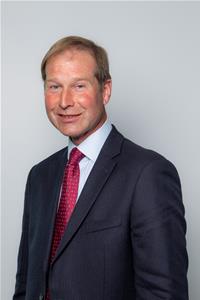

















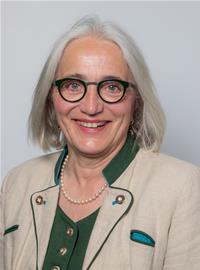






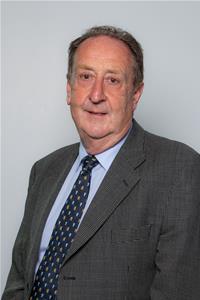


















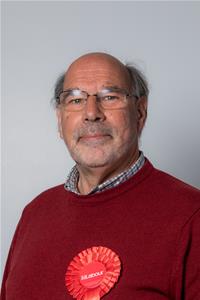











Topics
Meeting Documents
Reports Pack
Additional Documents