Subscribe to updates
You'll receive weekly summaries about Brent Council every week.
If you have any requests or comments please let us know at community@opencouncil.network. We can also provide custom updates on particular topics across councils.
Standing Advisory Council for Religious Education (SACRE) - Tuesday 22 July 2025 5.00 pm
July 22, 2025 Standing Advisory Council for Religious Education (SACRE) View on council websiteSummary
Open Council Network is an independent organisation. We report on Brent and are not the council. About us
The Brent Standing Advisory Council for Religious Education (SACRE) met on Tuesday 22 July 2025 to discuss several items, including the election of a chair and vice chair, and determination applications from six local primary schools. The meeting also included a general RE update and a NASACRE 1 update.
Election of Chair and Vice Chair
The meeting was scheduled to begin with the annual election of the SACRE Chair and Vice-Chair. According to the SACRE Constitution, the local authority has agreed not to exercise their right to appoint the Chair and Vice Chair, meaning the appointments would be a matter for SACRE to agree. The term of office for the Chair and Vice Chair is one year, covering the 2025-26 academic year, with future elections to take place at the last SACRE meeting of each preceding academic year.
Determinations
A significant portion of the meeting was set aside to consider determination applications from several primary schools. Under the Education Act 1996, all schools in England and Wales are required to provide a daily act of collective worship for all pupils, and this should be 'wholly or mainly of a broadly Christian character'. However, if a school successfully applies for a 'determination' it is released from this obligation, and is free to organise acts of worship that are not of a broadly Christian character. The report pack included details of determination applications from the following schools:
- Fryent Primary School
- Kingsbury Green Primary School
- Leopold Primary School
- Park Lane School
- Roe Green Junior School
- Wykeham Primary School
Each school had to provide an outline of the reasons for their application, details of consultations with governors and parents, and an outline of their proposed provision for collective worship.
Fryent Primary School
Fryent Primary School's application indicated that it was a renewal of an existing determination, as the school has a diverse multi-cultural community. Governors were consulted and agreed unanimously that as the majority of children are of faiths other than Christian that a re-application for determination should be made. A letter was sent to parents, and there were 3 objections out of 683 pupils on roll. The school uses the Brent SACRE model approach as a guideline. The Fryent School Prayer is said daily with all children in their classrooms, and the prayer is not directed at any one deity.
The Fryent Primary School Collective Worship Policy states:
Collective Worship is a time when the whole school, or groups within the school no matter what their faith or belief or background meet together in order to consider and reflect on common concerns, issues and interests.
Kingsbury Green Primary School
Kingsbury Green Primary School's application stated that the school community is made up of many beliefs and traditions, with significant populations of students who identify as Muslim (42%), Christian (29%), Hindu (20%), and Jain (8%), as well as a number of children who do not adhere to any religion. The application was discussed at the Governors' meeting on Tuesday 1 April 2025, and the Governors agreed that they should continue with their multi-faith approach. A letter was sent to parents informing them of the decision to renew the determination, and inviting them to respond if they objected. No parents objected to this application. The school consulted with pupils, and all children agreed that they were happy to continue with the multi-faith approach. Their collective worship practices are based on the Brent SACRE's model approach and include assemblies, a period of reflection, and lunchtime reflection.
Leopold Primary School
Leopold Primary School's application stated that the school is a community school not designated with a specific religious character, and as a non-faith school they are a secular space. The school recognises that children and staff from many faiths attend the school, and they celebrate diversity and take an inclusive approach to collective worship. The school population breakdown by religion is: Muslim 48%, Christian 22%, Other 22%, No religion 8%. Governors were informed of current practice and intention to reapply for Determination, and they agreed to proceed. A letter was sent to families, and there were ad hoc discussions on school gates. There are no children currently withdrawn from collective worship. The school would plan to continue following the Brent SACRE model policy.
Park Lane School
Park Lane School's application stated that having a 'Determination' will enable them as a school community to have collective worship that promotes common values, aspirations and commitments, and it will encourage pupils and adults of different faith and beliefs to willingly participate together in collective worship. Given the high number of non-Christian students at Park Lane Primary School, it can be argued that participating in worship outside their own faith, even willingly, may conflict with their religious teachings. The application was discussed at the full governing body meeting on Monday 28th April 2025. The Governors approved the wording of a letter which the Head teacher proposed to send to parents seeking their views on the intention to apply for a further 5-year term in applying the SACRE multi-faith religious syllabus. Parents were consulted about their views on renewing their existing 'Determination'. Assemblies are held to celebrate major religious festivals.
Roe Green Junior School
Roe Green Junior School's application stated that there are 471 pupils on roll aged 7-11. The proportion of pupils from different religions is; Christian 35%, Hindu 23%, Muslim 34%. This Application was discussed with the Governors, and the Governors unanimously stated their wish to continue with existing practice based on a multi-faith approach and to follow SACRE's Recommended Approach. A letter was sent to parents informing them of their decision to apply for a determination based on the continuation of present practice and inviting them to respond if they objected. Two parents replied to this application, one parent wanted clarification of the word 'Worship', and the other parent replied 'No' they did not agree. The school would like to enable all children to take part in a daily act of collective worship of such a type that would be acceptable to all parents.
Wykeham Primary School
Wykeham Primary School's application stated that the school has diverse faith backgrounds in the school community, and adopting a multi-faith approach to collective worship ensures that all pupils feel included and respected, regardless of their personal religious or spiritual background. The application was initially discussed with the Chair of Governors on 29/04/2025, and was shared at the Governors' meeting on 24/06/2025. The governors unanimously stated their wish to continue with existing practice based on a multi-faith approach and to follow SACRE's Recommended Approach. A letter was sent to parents on 14/05/2025 informing them of the Headteacher's decision to renew a determination based on their evaluation of the present practice and inviting them to respond if they objected. No parents objected to this application. Collective worship will take place daily, and the content of collective worship will adopt a multi-faith approach, encompassing various religious and spiritual traditions.
General RE Update
The SACRE Advisor, Nadia Nadeem, was scheduled to provide a general update on SACRE and RE related issues. The report pack included a document titled General RE Updates, which included information on the Areiac/Aulre conference that took place at Exeter University. Discussions at the conference included:
- Teaching a decolonised RE curriculum
- Ensuring RE isn't 'Green washed' and that schools look at why religious beliefs have not enabled people to look after the planet
- Bringing barriers down in teaching and learning of RE, and making the RE curriculum accessible to neurodiverse pupils and teachers
- Use of AI in the RE curriculum benefits and risks
- Teacher training in RE and the teaching of RE
NASACRE Update
Nadia Nadeem was also scheduled to provide an update on NASACRE. The report pack included a NASACRE Update document, which noted that NASACRE has become a Charitable Incorporated Organisation (CIO). The update also referred to the interim report of the Curriculum and Assessment Review, which was published on 18 March, and included a mention of RE on page 29. The review expects to recommend a phased programme of work in different subject areas and will publish its final report in autumn 2025. The update also mentioned a message from Lord Khan of Burnley, Parliamentary Under-Secretary of State (Lords Minister for Faith, Communities and Resettlement), who demonstrated his commitment to communities and young people, and recognised that schools are working to foster respect and understanding.
-
NASACRE stands for the National Association of Standing Advisory Councils for Religious Education. It is a national organisation that supports local SACREs in their work to promote religious education. ↩
Attendees
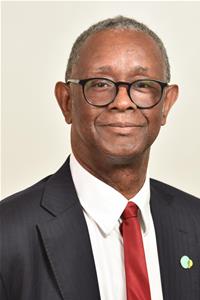
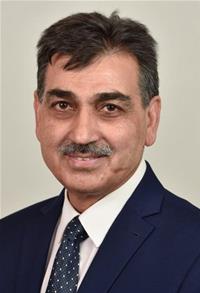

Topics
No topics have been identified for this meeting yet.
Meeting Documents
Reports Pack
Additional Documents