Limited support for Swansea
We do not currently provide detailed weekly summaries for Swansea Council. Running the service is expensive, and we need to cover our costs.
You can still subscribe!
If you're a professional subscriber and need support for this council, get in touch with us at community@opencouncil.network and we can enable it for you.
If you're a resident, subscribe below and we'll start sending you updates when they're available. We're enabling councils rapidly across the UK in order of demand, so the more people who subscribe to your council, the sooner we'll be able to support it.
If you represent this council and would like to have it supported, please contact us at community@opencouncil.network.
Summary
Open Council Network is an independent organisation. We report on Swansea and are not the council. About us
Councillor Philip Downing, Chair, presided over the Economy & Infrastructure Service Transformation Committee meeting, which included an update on the UK Shared Prosperity Fund and a review of the Committee's Work Plan. The committee noted the progress and challenges of the Shared Prosperity Fund, particularly regarding future funding uncertainties.
Shared Prosperity Fund Update
The committee received an update on the UK Shared Prosperity Fund (SPF) from Paul Relf, Strategic Economic Regeneration Manager. The SPF was established as a partial replacement for European Structural Funds after the UK's exit from the European Union, with Swansea Council acting as the lead authority and banker for the South West Wales region. The programme is designed around 'anchor' projects aligned with core delivery areas, including:
- Business development and funding
- Employability from pre-16 to adult
- Supporting Communities
- Placemaking investments
- Culture and Tourism
- Rural development
Each anchor project includes staff-delivered support and grant routes for businesses and other organisations. Skills development is offered via open call to Further Education and its partners, with a separate allocation of 'Multiply' funding focused on numeracy skills for people aged 19+.
Mr Relf noted that evaluation of the programme has been emphasised to test and understand delivery approaches to local economic and community development to enable investment in 'what works' going forward. He noted the need to strike a balance between ensuring 'depth' versus 'breadth' of investment, with smaller scale investment having been limited for a considerable time.
The report noted the programme's results to date:
| Outputs & Outcomes | Actual |
|---|---|
| Jobs created as a result of support | 168 |
| Jobs safeguarded as a result of support | 172 |
| Number of enterprises receiving grants | 238 |
| Number of enterprises receiving non-financial support | 1,122 |
| Number of people receiving support to gain employment | 1,682 |
| Number of people supported to access basic skills courses | 606 |
| Number of people supported to gain a qualification | 3,193 |
| Amount of public realm created or improved sqm | 1,190 |
| Number of neighbourhood improvements undertaken | 80 |
The SPF transition year runs from 1 April 2025 to 31 March 2026, with the anchor project structure and open call projects extended as far as the budget allows. A budget of £211m per year for three financial years from April 2026 was confirmed in the summer Comprehensive Spending Review.
Mr Relf concluded:
The UK Shared Prosperity Fund experiment has created a programme that is different to what has gone before, and used creatively has enabled a more response approach to local need, whilst addressing regional national and regional priorities.
He noted that there are no alternative funding streams for this type of work, whereas high level research and development can access a range of competitive funds such as UKRI, ESRC and others, which are more appropriate to certain sectors such as higher education, but of themselves do not bridge the gap to regional economic development and hard economic outcomes that are tangible to the general public.
Work Plan
The committee reviewed the Work Plan for 2025-2026, which outlines the agenda items for future meetings. The next meeting was scheduled for 16 October 2025, with the topic of Placemaking Plan to be discussed.
Attendees
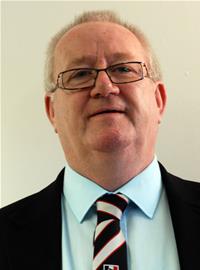
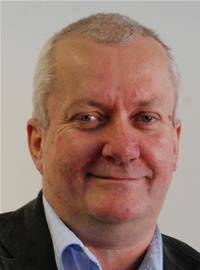
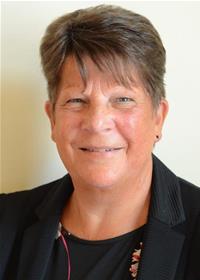
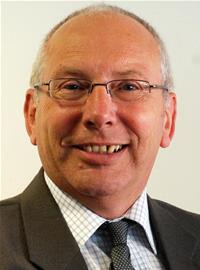
Topics
No topics have been identified for this meeting yet.
Meeting Documents
Agenda
Reports Pack