Subscribe to updates
You'll receive weekly summaries about Worcestershire Council every week.
If you have any requests or comments please let us know at community@opencouncil.network. We can also provide custom updates on particular topics across councils.
Health Overview and Scrutiny Committee - Monday, 8th September, 2025 2.00 pm
September 8, 2025 Health Overview and Scrutiny Committee View on council website Watch video of meeting Read transcript (Professional subscription required)Summary
Open Council Network is an independent organisation. We report on Worcestershire and are not the council. About us
The Health Overview and Scrutiny Committee met to discuss community engagement in health improvement, review the committee's work programme, and identify priorities for the future. Councillors heard about several initiatives aimed at empowering local communities to take an active role in improving their health and wellbeing, including the Priority Neighbourhood Development Programme, school grants, and the use of green spaces. The committee agreed to continue its focus on reviewing the 2022-2032 health and wellbeing strategy and empowering the new council formed after local government reorganisation to continue and build on current work.
Engaging Neighbourhoods and Communities in Health Improvement
The committee convened to discuss a report on engaging neighbourhoods and communities in health improvement, focusing on how Worcestershire health and care partners are working to empower local communities to actively improve their health and wellbeing. The report highlighted the importance of community-led solutions and asset-based development, particularly in improving mental health and wellbeing, in line with the Joint Local Health and Wellbeing Strategy 2022-2032.
Dr Lisa McNally, Director of Public Health, introduced the report, emphasising the importance of giving local people a genuine role in shaping health initiatives. She quoted Dr Mark Hyman, an American physician, stating:
The power of community to create health is far greater than any physician, clinical hospital.
Dr McNally noted that the work described in the report was a small sample of what could have been included and that all the public health work had been done in partnership with district councils, the voluntary sector, NHS partners, and elected members.
Priority Neighbourhood Development Programme
The Priority Neighbourhood Development (PND) programme was a key focus, with Dr Lisa McNally explaining that it is a data-driven initiative targeting neighbourhoods with the most unmet health needs. The programme involves working with residents to co-design and co-deliver solutions to local issues. The pilot scheme on the Westlands Estate in Droitwich saw emergency admissions fall by 7% and child-in-need referrals to social care drop by 13%. Dr McNally noted that entrusting a resident committee with significant funds had been a controversial decision, but one they were glad they made. The PND programme won a national Local Government Chronicle Public Health Award in 2025.
Councillor Tom Wells, Chair of the Overview and Scrutiny Performance Board, asked about the measurable impact of the initiatives. Dr Lisa McNally explained that emergency admissions and referrals from children's social care were key indicators, alongside levels of social isolation, social contact, and access to mental health support.
Councillor Nik Price asked whether the outcomes seen in Westlands were being replicated across all 14 priority neighbourhoods. Dr Lisa McNally responded that while it was too early to tell regarding quantitative outcomes, the qualitative outcomes and stories were already shining through in all areas.
School Grants
Dr Lisa McNally highlighted the council's school grants, which empower schools to develop their own health and wellbeing initiatives. She gave examples such as sensory rooms, balance bikes and therapy animals. Councillor Satinder Bell, Cabinet Member with Responsibility for Health and Wellbeing, had even been featured on BBC television with some guinea pigs as part of one of the school initiatives. Dr McNally said that the children and school teams often came up with ideas that she would never have thought of.
NHS Initiatives
Sarah Speck, Director of Police Development for the NHS, outlined the NHS's focus on moving from hospital to community care, from analogue to digital, and from illness to prevention, in line with the NHS 10-year health plan. She emphasised the importance of partnership working between the NHS, local authorities, the voluntary sector, higher education, and local communities.
Jane Thomas, Head of Patient and Public Engagement Experience and Participation from the Health and Care Trust, detailed several programmes aimed at engaging and empowering people, including participation groups, a youth board, and the Care Opinion feedback platform. She also highlighted the work with OnSide Advocacy, where independent patient experience visitors attend mental health wards and provide feedback that leads to improvements such as the introduction of yoga and social food nights.
Dr Julian Berlet, Anaesthetist in the Acute Trust and Chief Clinical Strategy Officer, spoke about the shifting perception within the Acute Trust towards considering the global health of the population, not just treating illness. He mentioned the Primary and Secondary Care Interface Meeting, where representatives from various healthcare organisations work on pathways to improve patient outcomes.
Primary Care
Ruth Lemiech, Managing Director of Wild Forest Health Partnerships, discussed how a small amount of funding from the Integrated Care Board (ICB) had allowed them to demonstrate what could be achieved through neighbourhood thinking. She highlighted the importance of using data to target interventions effectively.
Councillor Karen May asked how data was being fed through from primary care networks, given that not all networks were performing at the same level. Ruth Lemiech explained that they were piloting work to match primary care data with secondary care data, the Health and Care Trust, and the ambulance service, which would then be rolled out across Worcestershire.
Community Engagement
Councillor Richard Udall, Worcester City Council District Council Representative, raised concerns about intervention resistance from communities who may perceive outside intervention negatively. Dr Lisa McNally responded that the community development model is designed to avoid intervention, instead making resources available to local people and trusting them to control what happens.
Councillor Karen May asked what councillors could do to enable the progress of community development. Dr Lisa McNally suggested that councillors could provide air cover for controversial decisions and act as community activists, being the eyes and ears and movers and shakers on the ground
.
Vaping
Councillor Bakul Kumar, Bromsgrove District Council Vice-Chair, raised the issue of vaping in schools and asked what was being done to educate young people about the risks. Dr Lisa McNally responded that the public health team had consulted with young people to design posters and messages about vaping. She also noted that the trading standards team were working with the police to confiscate illegal vapes and close down retailers who sell them, addressing both the supply and demand sides of the issue.
Councillor Adrian Hardman asked whether confiscated vapes were being analysed for contaminants. Dr Lisa McNally confirmed that they were, and that illegal vapes had been found to contain dangerous poisons, including Spice and THC.
Work Programme
The committee reviewed its work programme and agreed to include several items for future discussion.
Councillor Karen May stated that the committee would be receiving an overview of common neurological conditions on 10 November 2025.
The committee is expected to discuss winter planning and pharmaceutical needs at its next meeting, with an integrated care board update scheduled for November.
The committee agreed to positively review the 2022-2032 health and wellbeing programme and strategy, and to consider how to empower the new council formed after local government reorganisation to continue and build on current work.
Attendees


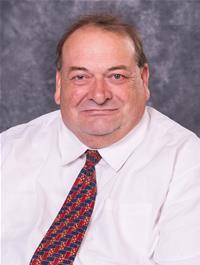
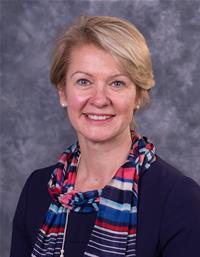


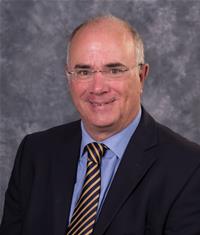
Topics
No topics have been identified for this meeting yet.