Limited support for Wolverhampton
We do not currently provide detailed weekly summaries for Wolverhampton Council. Running the service is expensive, and we need to cover our costs.
You can still subscribe!
If you're a professional subscriber and need support for this council, get in touch with us at community@opencouncil.network and we can enable it for you.
If you're a resident, subscribe below and we'll start sending you updates when they're available. We're enabling councils rapidly across the UK in order of demand, so the more people who subscribe to your council, the sooner we'll be able to support it.
If you represent this council and would like to have it supported, please contact us at community@opencouncil.network.
Health and Wellbeing Together - Wednesday, 10th September, 2025 10.00 am
September 10, 2025 Health and Wellbeing Together View on council websiteSummary
Open Council Network is an independent organisation. We report on Wolverhampton and are not the council. About us
The Health and Wellbeing Together board met to discuss several key issues impacting the health and wellbeing of Wolverhampton residents. The board approved the publication of the Children and Young People's Oral Health Joint Strategic Needs Assessment (JSNA), received an update on the Joint Local Health and Wellbeing Strategy: Smoking Priority, and discussed the NHS 10 Year Health Plan for England.
Children and Young People's Oral Health Joint Strategic Needs Assessment
The board approved the publication of the Children and Young People's Oral Health Joint Strategic Needs Assessment (JSNA) and endorsed its recommendations. The JSNA highlights the oral health status of children and young people in Wolverhampton and provides recommendations for improvement.
Key findings of the JSNA include:
- 22.1% of five-year-olds in Wolverhampton have decayed, missing, or filled teeth, which is similar to the national average.
- By Year 6, 42.7% of Wolverhampton children are affected, more than double the national average, ranking Wolverhampton highest in the country for dental decay in this age group.
- Tooth decay rates are highest among children from the most deprived areas.
- Tooth decay rates also vary by ethnicity, with higher rates among 'Other' and 'Asian' children at age five, and among 'Mixed', 'White', and 'Asian' children by Year 6.
The JSNA recommends:
- Continuing core training for professionals working with children and families.
- Promoting dental attendance for children from when their first milk teeth appear, or before they are 12 months old, followed by regular check-ups.
- Expanding oral health resources for families where English isn't their first language.
- Overseeing the expansion of the Brilliant Brushers programme, including for more deprived areas and special school settings.
- Exploring ways to strengthen prevention efforts within primary dental care.
- Improving access to dental care for all children and young people, with a focus on reducing oral health inequalities.
- Encouraging schools to provide oral health education as part of the Personal, Social, Health and Economic Education (PSHE) curriculum.
- Promoting healthy eating in early years and education settings.
- Understanding the oral health needs of secondary school-aged children.
- Supporting the National Dental Epidemiology Programme (NDEP) oral health surveys.
- Embedding oral health promotion within Make Every Contact Count (MECC) initiatives1.
- Involving children, young people, and parents in co-producing oral health campaigns and materials.
- Maximising opportunities in the NHS 10 Year Plan to embed a co-ordinated approach to oral health promotion and prevention.
- Using the needs assessment to influence commissioning of local services and inform policy decisions.
- Promoting and facilitating local data sharing mechanisms between the Integrated Care Board (ICB), health partners, and the council.
The JSNA also provided a detailed overview of existing services and community assets, including:
- The distribution of over 49,000 toothbrushes and tubes of toothpaste across the city.
- Oral health training for over 100 local professionals.
- Oral health education in all schools in the city during PSHE lessons.
- The Supervised Toothbrushing ('Brilliant Brushers') programme, which targets children aged 3-5 in the most deprived areas.
- The creation of an oral health storybook co-produced with local children.
- The publication of a comprehensive oral health toolkit.
Joint Local Health and Wellbeing Strategy: Smoking Priority Update
The board received a briefing note update on work undertaken by the Wolverhampton Tobacco, Smoking and Vaping Addiction Partnership.
In 2023, Wolverhampton's estimated smoking prevalence was 14.7%. Certain population groups exhibit significantly higher smoking rates, including:
- Individuals in routine and manual occupations: 23.1%
- Residents diagnosed with a Serious Mental Illness (SMI): 40.6%
The City of Wolverhampton has received £369,416 for the current financial year to reduce smoking prevalence.
Initiatives to reduce smoking in Wolverhampton include:
- The Live Well Wolverhampton service, which provides targeted support for smoking cessation and weight management.
- A community-based 'Swap to Stop' programme, providing e-cigarettes/vapes alongside behaviour change support.
- The development of QuitCoach AI, an innovative digital smoking cessation solution delivered via WhatsApp.
- A large-scale communications campaign to increase visibility and uptake of smoking cessation support.
- Collaboration with the NHS Black Country Mental Health Trust to enhance smoking cessation pathways.
- Collaboration with the Black Country Integrated Care Board (ICB) and Integrated Care Partnership (ICP) to co-develop a regional tobacco control strategy and governance framework.
- Support for the Royal Wolverhampton NHS Trust (RWT) maternity tobacco dependency service.
- Exploration of small-scale, academically evaluated interventions with Riot Rehab, a vape provider with a strong outreach focus.
The NHS 10 Year Health Plan for England: Fit for the Future Policy Overview
The board received an overview of the NHS 10 Year Health Plan for England and approved recommendations to support the operationalisation of the plan.
The plan sets out a vision to reinvent the NHS through three 'radical' shifts:
- Hospital to community
- Analogue to digital
- Sickness to prevention
Key components of the plan include:
- A new operating model
- A new era of transparency
- A new workforce model
- A reshaped innovation strategy
- A different approach to NHS finances
- Enhanced choice and control for patients
- A more focused role for Integrated Care Boards (ICBs)
- Changes to financial flows within the NHS
- Changes to payment mechanisms
- Multi-year allocations for both day-to-day spend and capital
- Two new Primary Care contracts
- The establishment of Integrated Health Organisations (IHOs)
- The establishment of a Neighbourhood Health Service approach
- Reforms to the Better Care Fund (BCF)
- The replacement of Healthwatch England with a new National Director of Patient Experience
- A focus on oral health, obesity and physical activity, smoking, alcohol, air quality, active travel, mental health and wellbeing, health protection and measures to support uptake of cancer screening
The board endorsed the following recommendations:
- That the Chair of Health and Wellbeing Together meet with key local and regional stakeholders to remain fully sighted on the emerging local response to the ambitions set out in the NHS Ten Year Plan.
- To receive a future update on the outcome of Wolverhampton's application to participate in the National Neighbourhood Health Implementation Programme.
- To receive a future update on any local governance implications for the Health and Wellbeing Together Board as the NHS Ten Year Plan is operationalised.
Healthwatch Annual Report 2025
The board received the Healthwatch Annual Report 2025.
Healthwatch Wolverhampton is the local health and social care champion, ensuring that NHS leaders and decision-makers hear the voices of local people and use their feedback to improve care.
In 2024/25, Healthwatch Wolverhampton:
- Supported more than 3,093 people to have their say and get information about their care.
- Employed four staff and was supported by 50 volunteers.
- Published five reports, including reports on support for people awaiting an autism diagnosis, local mental health services, and a local GP medical centre.
- Worked with neighbouring Healthwatch to ensure people's experiences of care in Wolverhampton are heard at the Integrated Care System (ICS) level.
- Collaborated with local Healthwatch organisations across the Black Country to submit a freedom of information (FOI) request to the NHS Black Country ICB, seeking greater transparency on key areas of public interest.
- Worked with various organisations to improve the quality of services for all local people.
- Addressed access needs for those with sensory loss.
- Tackled health inequalities by reaching areas of the community they don't currently hear from.
- Ensured a positive and joined up experience for those receiving adult social care by working with partners implementing integrated neighbourhood care.
-
Make Every Contact Count (MECC) is an approach to behaviour change that utilises the everyday interactions that staff have with people to encourage them to make positive changes to their physical and mental health and wellbeing. ↩
Attendees


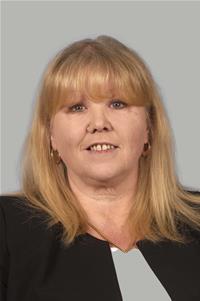


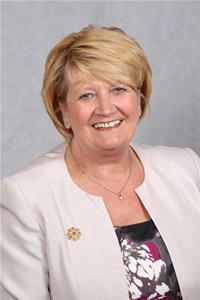
Topics
No topics have been identified for this meeting yet.
Meeting Documents
Additional Documents