Limited support for Southend-on-Sea
We do not currently provide detailed weekly summaries for Southend-on-Sea Council. Running the service is expensive, and we need to cover our costs.
You can still subscribe!
If you're a professional subscriber and need support for this council, get in touch with us at community@opencouncil.network and we can enable it for you.
If you're a resident, subscribe below and we'll start sending you updates when they're available. We're enabling councils rapidly across the UK in order of demand, so the more people who subscribe to your council, the sooner we'll be able to support it.
If you represent this council and would like to have it supported, please contact us at community@opencouncil.network.
Extraordinary (Local Government Reorganisation), The Council - Wednesday, 10th September, 2025 7.45 pm
September 10, 2025 The Council View on council websiteSummary
Open Council Network is an independent organisation. We report on Southend-on-Sea and are not the council. About us
Here is a summary of the scheduled discussions for the Southend-on-Sea City Council's extraordinary meeting on 10 September 2025. The main item for consideration was the submission of a proposal for local government reorganisation in Greater Essex. This proposal suggests the creation of five new unitary authorities, and the council was asked to consider a report on the matter and make recommendations to the cabinet.
Local Government Reorganisation Proposal
The council was scheduled to review a report concerning the proposal for local government reorganisation (LGR) in Greater Essex, which suggests establishing five new unitary authorities. This proposal was in response to a request from the Ministry for Housing, Communities and Local Government (MHCLG).
The report pack included the Cabinet report on the Submission of a Proposal for Local Government Reorganisation in Greater Essex for Five New Unitary Authorities. This cabinet report stated that Southend-on-Sea City Council, and Greater Essex, had an opportunity to modernise how they govern. The report stated that the proposal for five unitary authorities presented a sustainable remodel of modern government.
The report pack stated that in March 2025, Greater Essex submitted an interim plan for local government reorganisation to the MHCLG. The MHCLG provided feedback on 7 May 2025. The report pack stated that the five unitary model was favoured by a majority of Greater Essex council leaders. For Southend, this would mean a new unitary authority, with a population of around 356,000, formed from the existing Southend-on-Sea, Castle Point, and Rochford councils.
The report pack stated that the government's English Devolution and Community Empowerment Bill was introduced to Parliament on 10 July 2025, delivering on the government's commitment to widen and deepen devolution across England. It supports the government's plan to rebuild and reform local government.
The report pack stated that the vision was for five new councils which continue to reflect the unique and distinctive characteristics of the communities they represent. The proposal considers the lived experience of the people of Essex and reflect the places in which they spend most of their lives. The proposal reflects local identities, history and culture and is true to sensible social and economic viability.
The report pack stated that the five new councils represent the boundaries that will already feel relatable to the people of Essex. They will strengthen a sense of identity, civic pride and trust in local government by ensuring each unitary authority represents a real and already recognised geography.
The report pack stated that the five new councils ensure an even split of major conurbations across the Greater Essex footprint, reflecting the places where people live, work, and play and where children go to school. This allows each new council to act as an enabler for growth and transformation within its geography and to tailor its operating model to reflect the unique context and potential of its place.
The report pack stated that the five new councils are based on firmly established local histories and identities that have been shaped by centuries of lived experience and government. Geography and lived reality are essential in shaping a sense of place and civic pride. The proposal takes into account distances, rivers, forests, seas, major roads, rail routes, and country lanes.
The report pack stated that the five new councils ensure effective democratic representation for the people of Greater Essex, ensuring efficient delivery of the administrative function in terms of overall size without compromising the ability of councillors to be effective and accessible to their residents.
The report pack stated that the five new councils use existing district, city, borough, and unitary ward boundaries as building blocks for new electoral arrangements, grouped as necessary to provide new warding arrangements of approximately 6,000 electors (with two councillors representing) and 9,000 electors (with three councillors representing). The proportionate representation of the population is comparable within each new council, ensuring equity of representation at a local level.
The report pack stated that the five new unitary authorities have a clear and coherent geography aligned to their respective real-world travel and economic flows. Functional alignment enables unitary authorities to integrate transport and economic strategies between neighbouring places and work with the MSA to support how residents live, work, and access leisure, education, and health.
The report pack stated that the five new unitary authorities will be equipped with the powers, partnerships, and capacity to drive local growth. They will support thriving business ecosystems, enable targeted investment, and provide leadership across skills, employment, and innovation.
The report pack stated that the five unitary authority model will expand Community Safety Partnerships (CSPs), enabling smarter, more connected services that can more easily be scrutinised and that will lead to safer streets across Essex.
The report pack stated that the five unitary authority model will create a unique chance to accelerate the county's transition to green energy. As local, single planning authorities, unitary authorities will be able to streamline approvals and attract direct, locally supported investment in sustainable infrastructure.
The report pack stated that the five unitary authorities will gain clearer oversight of schools and development opportunities. They will create locally aware, high-capacity authorities that are able to undertake targeted interventions, which will in turn lead to better planning and more responsive school provision, especially in Essex's growing areas.
The report pack stated that the creation of five unitary authorities for Greater Essex will provide a major opportunity to reshape public health strategies. With unitary authorities responsible for social care in their respective areas, Greater Essex can support the NHS's shift toward preventative, neighbourhood-based care in line with the NHS 10-Year Health Plan.
The report pack stated that the five unitary authority model is explicitly aligned to the Ministry of Housing, Communities and Local Government's six criteria for reorganisation:
- A single tier of local government.
- Councils of a size that is efficient, sustainable, and local.
- Delivery of high-quality, sustainable local services.
- Strong local support.
- Strategic leadership and commitment to devolution.
- Local identity and strong community engagement.
The report pack stated that other councils in the Greater Essex have different proposals which they feel meet the Government's criteria. Essex County Council have developed a proposal for three new unitary authorities, grouping Southend with Thurrock, Basildon, Castle Point and Rochford, presenting a population of 730,000 making it the biggest council in the country. Thurrock Council are proposing four new unitary authorities, which would see Southend grouped with Basildon, Castle Point and Rochford and a population of 550,861. Rochford are also proposing four new unitary authorities, which would see Southend grouped with Thurrock, Basildon and Castle Point.
The report pack stated that the final decision on a proposed restructure is made by the Secretary of State, and a reorganisation does not require the affected councils to give formal consent. There is no mechanism for the public to support or oppose reorganisation through a petition or a referendum.
The report pack included a recommendation that the Council consider the Cabinet report and makes recommendations to Cabinet as it sees fit.
Attendees
































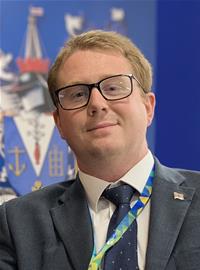
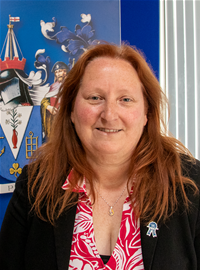




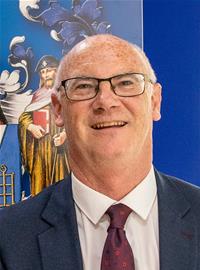



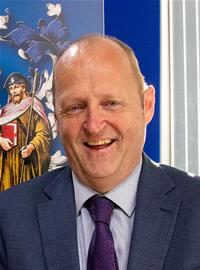




Topics
No topics have been identified for this meeting yet.
Meeting Documents
Additional Documents