Limited support for Caerphilly
We do not currently provide detailed weekly summaries for Caerphilly Council. Running the service is expensive, and we need to cover our costs.
You can still subscribe!
If you're a professional subscriber and need support for this council, get in touch with us at community@opencouncil.network and we can enable it for you.
If you're a resident, subscribe below and we'll start sending you updates when they're available. We're enabling councils rapidly across the UK in order of demand, so the more people who subscribe to your council, the sooner we'll be able to support it.
If you represent this council and would like to have it supported, please contact us at community@opencouncil.network.
Democratic Services Committee - Thursday, 11th September, 2025 5.00 pm
September 11, 2025 Democratic Services Committee View on council website Watch video of meetingSummary
Open Council Network is an independent organisation. We report on Caerphilly and are not the council. About us
The Democratic Services Committee met to discuss an Audit Wales report on scrutiny arrangements, the Democratic Services annual report, and a consultation on extending the duty on local authorities to broadcast meetings. The committee reviewed and noted the Audit Wales report and action plan, noted the contents of the Democratic Services annual report, and agreed to provide views on the Welsh Government consultation document by the deadline.
Audit Wales Report on Scrutiny Arrangements
The Democratic Services Committee reviewed the Audit Wales Report - Review Of Scrutiny Arrangements, which assessed the effectiveness of the council's scrutiny function. The report, conducted between November 2024 and February 2025, sought to answer the question: Do the Council's arrangements support effective scrutiny?
Audit Wales concluded that scrutiny in Caerphilly had limited impact, raising questions about its value for money. The report identified several key issues:
- The role of scrutiny is understood, but responsibilities are not always applied.
- Training and support are offered, but their impact is questionable.
- Limited member involvement in planning scrutiny activity affects ownership of the work.
- Scrutiny committee meetings can lack impact.
- The council does not proactively engage the public in scrutiny.
- The council does not fully evaluate scrutiny's impact or its value for money.
The report made five recommendations, to which the council provided a management response and action plan:
- Roles and responsibilities: Scrutiny members should read reports before meetings and hold the cabinet to account. The council will share Welsh Local Government Association (WLGA) good practice guides, trial pre-meetings, and encourage scrutiny members to directly question cabinet members. Specific scrutiny training will be sourced.
- Support and training: The council should revisit its training and support to meet members' needs and work with members to determine whether reports are meeting their needs. Annual training on the terms of reference for each scrutiny committee will be run, and the Scrutiny Leadership Group will undertake regular reviews of report content and quality.
- Work planning: The council should revisit its work planning processes to ensure members can contribute meaningfully to the work programme and that topics reflect the council's risks and priorities. A members' dashboard for forward work programmes will be established, and each scrutiny committee will workshop its forward work programme.
- Engaging with the public: The council should proactively explore opportunities to engage the public in scrutiny beyond formal committee meetings. The council will work with the communications team to increase scrutiny's presence on the council website and social media platforms and develop opportunities with IT services to increase traffic to scrutiny webpages.
- Evaluating impact: The council should move beyond measuring scrutiny activity to evaluating its impact and identify how to improve member response rates to its self-evaluation survey. A database of qualitative and quantitative data will be developed, and the survey process will be mapped to optimise returns.
The committee was asked to review and note the report, as well as provide views on the actions taken and planned. Following consideration, the committee resolved to note the report and the comments on the support provided during 2023/24. A copy of the report will be provided to the Governance and Audit Committee for their information.
Democratic Services Committee Annual Report
The committee considered the Democratic Services Annual Report FINAL, which provided details of the current and planned services and support provided to elected members. The report outlined the various functions of the Democratic Services team, including committee services, member training and development, scrutiny, leader and cabinet support, and the civic office.
Key points from the report included:
- Committee Services: 140 committee meetings were arranged, with agendas and minutes produced on time.
- Petitions: 12 petitions were progressed.
- Hybrid Meetings: Since May 2022, council meetings have been held on a multi-locational basis, with technical support provided to members.
- Member Training and Development: A two-year member support and development programme was implemented, providing training on topics such as hate crime, integrated impact assessments, and chairing skills.
- Seminars: 12 member seminars were supported, covering topics such as homelessness, treasury management, and suicide prevention measures.
- Scrutiny: The Democratic Services team provided support to the council's scrutiny committees, with a total of 26 scrutiny committee meetings and 8 joint scrutiny committee meetings held.
- Civic Office: The Mayor's assistant provided support to the Mayor and Deputy Mayor, and the council chauffeur provided a chauffeuring service.
- Leader and Cabinet Office: The PA to the Leader and Deputy Leader and the PA to the Cabinet provided support with complaints, correspondence, and diary management.
- Gwent Police and Crime Panel: The Scrutiny Manager and Scrutiny Officer supported the panel, which holds the Gwent Police and Crime Commissioner to account.
The committee was asked to note the contents of the report and provide any comments on the support provided during 2024/25. The committee resolved to note the contents of the report and provide any comments on the support provided during 2024/25.
Consultation on Extending the Duty on Local Authorities to Broadcast Meetings
The committee reviewed the WG consultation on Extending Broadcast, a Welsh Government consultation document seeking views on extending the duty on local authorities to broadcast meetings. The consultation covered three main areas:
- Whether the duty on principal councils to broadcast meetings should be extended to include meetings other than that of the full council.
- Whether there should be a duty imposed upon fire and rescue authorities (FRAs) and/or National Park authorities (NPAs) to broadcast their meetings.
- Whether there should be a retention period for recordings of broadcast meetings.
The Welsh Government's proposal is to require the meetings of the following principal council statutory committees to be broadcast: Democratic Services, Governance and Audit, Licensing, Planning, Overview and Scrutiny, and Standards Committees, plus Cabinet meetings.
The consultation document noted that Caerphilly Council already broadcasts all of its formal meetings (excluding exempt items) and makes them available to view on the council's website, as per its Multi-Location Meeting Policy.
The committee was asked to provide its views on the consultation document, which will be fed back to the Welsh Government by the deadline of 28 November 2025. The committee resolved to provide its views on the consultation document by the deadline of 28 November 2025.
Attendees




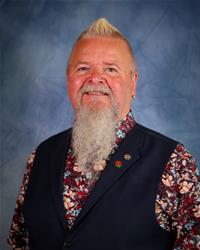


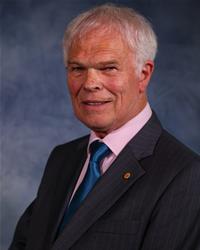



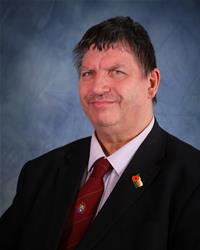




Topics
No topics have been identified for this meeting yet.