Subscribe to updates
You'll receive weekly summaries about Hinckley and Bosworth Council every week.
If you have any requests or comments please let us know at community@opencouncil.network. We can also provide custom updates on particular topics across councils.
Audit Committee - Wednesday, 1 October 2025 6.30 pm
October 1, 2025 Audit Committee View on council website Watch video of meetingSummary
Open Council Network is an independent organisation. We report on Hinckley and Bosworth and are not the council. About us
The Audit Committee of Hinckley and Bosworth Borough Council met on 1 October 2025, according to the agenda frontsheet. The meeting included a presentation on the fraud risk assessment strategy action plan, internal audit reports, the unaudited statement of accounts for 2024/25, and an update proposal for the audit committee's annual self-assessment. The committee was also scheduled to consider whether any items needed to be referred to the council.
Here's a closer look at the topics on the agenda:
Unaudited Statement of Accounts 2024/25
The committee was scheduled to review the financial settlement for 2024/25 and the Annual Governance Statement, according to the agenda frontsheet and the unaudited statement of accounts 202425. The Public reports pack included a report from the Head of Finance, A Wilson FCCA, BCom(Acc) (Hons), which provided background information on the statement of accounts. The report noted that draft financial statements must be signed off by the Council's Responsible Finance Officer by 31 July 2025, in accordance with Accounts and Audit regulations. The Audit Committee was to consider the Statement of Accounts, and approve them via a resolution, ensuring they are signed and dated by the chair of the committee.
The Public reports pack included a table, explaining the overall content of the financial statements:
Table 1 Information included within the financial statement
Comprehensive Income and Expenditure Statement (CIES)
This covers the sources of all income received and the cost of providing services in the year based on International Financial Reporting Standards and guidance issued by the Chartered Institute of Public Finance and Accountancy (CIPFA), rather than the amount funded from Council Tax, and other Government grants. The amount funded from Council Tax and Government grants differ from the information in CIES by a series of amendments made in accordance with regulations, these amendments are reflected through the Movement in Reserves Statement.
Movement in Reserves Statement (MIRS)
The MIRS shows the movement in the year on the various reserves held by the Council. Reserves are classified into usable and unusable reserves. Usable Reserves are those that can be used to cover expenditure or reduce the level of local taxation required. They include the general fund, earmarked reserves and the capital receipts reserve. Unusable reserves tend to arise due to difference in the legal responsibilities that cover how transactions need to be accounted for and accounting requirements. These reserves cannot be used to cover expenditure, and include the pensions reserve, the revaluation reserve and the capital adjustment account.
Expenditure & Funding Analysis
This is a reconciliation between management reporting segments and the CIES surplus and defect on the provision of services. The statement brings together local authority performance reported on the basis of expenditure measured under proper accounting practises with statutory defined charges to the General fund and HRA.
Balance Sheet
The Balance sheet gives the value of the Council's assets and liabilities at the financial year end, referred to as the Balance Sheet date. The net position of the total assets less total liabilities are matched by the overall level of reserves held.
Cash Flow Statement
The cash flow statement discloses movements in cash flows of the authority during the financial year. The cash flow statement shows movements in the authority's cash and cash equivalents. Cash equivalents include short term investments that are easily changeable into cash and only have an insignificant risk of changes in value.
Notes to the financial statements
These include a summary of significant accounting policies that guide our basis for the way items are accounted for, notes that give further information on items included in the main financial statements and other explanatory information.
Supplementary Statements: Housing Revenue Accounts, and Collection Fund
These are the Housing Revenue Account (HRA) and Collection Fund. The HRA covers the income from housing activities and Council's expenditure on Council housing; this has to be shown separately and has its own set of notes giving more detailed information. The Collection Fund gives level of business rates and council tax that the Council has to collect, not only for itself, but also for Central Government, Leicestershire County Council, Leicestershire Police & Crime Commissioner, Leicester, Leicestershire and Rutland Combined Fire Authority and on behalf of Town & Parish Councils.
Annual Governance Statement
The Council has approved and adopted a code of corporate governance, which is consistent with the national requirements on good governance in local government. The Annual Governance Statement provide a summary of how the Council has reviewed compliance with this code, the role of the governance structures involved, such as the Audit Committee and other Committees as relevant to governance, and any issues, if any are identified and proposed action needed.
The report also noted a national backlog in the delivery and sign off of Audited financial statements, caused by factors such as shortages in specialist audit resources and increasing regulatory requirements. As a result of a lack of assurance given by Ernst and Young (EY) over opening balances, Azets were expected to issue a disclaimed audit option for financial year 2024/25, and continue to give a disclaimed option in 2025/26. The report included a table outlining the best-case scenario impact of the backlog over the next two years.
The report recommended that the committee approve that the Chair of the Audit Committee be given delegated authority to sign off the Accounts.
Internal Audit Final Report: Homelessness 2024/25
The Audit Committee was scheduled to review the final internal audit report on homelessness for 2024/25. The audit objective was to assess the adequacy and effectiveness of key controls related to homelessness. The Public reports pack summarised the audit rationale:
To review the arrangements in place to reduce the level of homelessness and use of temporary accommodation.
The report noted that the strategic risk was increased homelessness presentations and temporary accommodation requirements. The audit opinion was moderate, with one medium priority and four low priority recommendations. Examples of good practice identified included:
- A readily available Homelessness and Rough Sleeping Strategy on the intranet.
- Various ways for customers to approach the council for support, such as email, customer services, the council's website, and visiting the Council Hub.
- The Housing Options team following set criteria when establishing eligibility for temporary accommodation.
Medium priority findings included long time periods between communications and Personalised Housing Plan (PHP) reviews not being recorded. The key root causes were delays caused by third parties and cases not being reallocated in a timely manner due to team workloads.
The report included a summary action plan with recommendations such as:
- Arranging PHP reviews with customers to prevent communications being postponed and recording PHP reviews in the case management system.
- Implementing a clear internal service standard for completing Housing Assessments.
- Implementing six-monthly meetings to evaluate progress against the priorities in the Action Plan.
- Updating the Temporary Accommodation Procedures to outline that the cheapest third-party provider meeting the customer's needs should be used.
- Introducing a regular reporting cycle to the Senior Leadership Team (SLT).
Internal Audit Final Report: Fire Safety 2024/25
The Audit Committee was scheduled to review the final internal audit report on fire safety for 2024/25. The audit aimed to assess the design and effectiveness of the control framework related to fire safety. The Public reports pack summarised the audit rationale:
To assess the controls in place to ensure compliance with the relevant fire safety legislation for commercial premises.
The report noted that the strategic risk was failure to adhere to health and safety legislation and regulations. The audit opinion was moderate, with four medium priority and one low priority recommendations. Examples of good practice identified included:
- A clear and readily accessible Fire Safety Policy signed off by the Chief Executive.
- Clearly detailed roles and responsibilities for fire safety within the Fire Safety Policy.
- Value for money achieved by using two in-house fire risk assessors.
Medium priority findings included routine servicing not occurring in line with policy requirements, fire risk assessment reviews completed late, incorrect dates and missing actions within the remedial action tracker, and performance reporting not in line with best practice. Key root causes included human error in scheduling equipment inspections and servicing, no centralised tracking for community centres, data entry issues due to manual processes, and an inconsistent approach to reporting.
The report included a summary action plan with recommendations such as:
- Identifying and completing any tests not compliant with agreed timescales or updating the policy accordingly.
- Considering incorporating community centres into the TrackPlan system.
- Introducing a formalised approach for following up on outstanding training.
- Standardising fire safety reporting across the Facilities and Housing Assets and Support team.
- Ensuring that three-yearly FRAs are scheduled far enough in advance and that contingencies are in place.
The audit scope considered commercial properties managed by the Facilities team, including The Atkins Building, The Hinckley Hub, and The Jubilee Building, and those managed by the Housing Assets and Support Team, including The Meadows Community Centre, 50 Gwendoline Avenue, Herford Way Community Centre, Groby Community Centre, Meadow Road Community Centre, 43 Bradgate Road, Peggs Close Community Centre, and Barlestone Community Centre.
Internal Audit Progress Report
The Audit Committee was scheduled to receive an update on the delivery of the 2024/25 Internal Audit Plan. The Public reports pack included a snapshot of internal audit activity, summaries of findings from recently issued reports, and overviews of the Internal Audit Plans for 2024/25 and 2025/26.
The report summarised the findings and root causes of issues identified in the final reports for the reviews of Homelessness and Fire Safety. It also included a table listing the status of all reviews within the 2024/25 Plan, including the audit sponsor, start date, assurance level, and number of high, medium, and low recommendations. A separate table listed the status of all reviews within the 2025/26 Plan, including the audit sponsor and start date.
The report also included a section on thought leadership, focusing on the public sector, and a statement of responsibility.
Audit Committee Annual Self Assessment - Update Proposal 2025
The Audit Committee was scheduled to discuss its annual self-assessment, according to the agenda frontsheet and the Audit Committee Annual Assessment. The Public reports pack included a proposal for updating the self-assessment, with a summary of actions taken in response to the last action plan.
Councillor DS Cope, Chair of the Audit Committee, noted in the report that the committee had monitored the action plan and seen improvements since the first assessment in late 2023. The report summarised progress on the action plan, with a RAG (Red, Amber, Green) rating for each item. It also included a table of good practice questions, with the action taken/needed, RAG rating, and previous score for each question.
The report recommended that Audit Committee members meet to complete an updated self-assessment before the next formal meeting.
Fraud Risk Assessment - Strategy Action Plan
Grant Thornton were scheduled to give a presentation on the fraud risk assessment strategy action plan. No further information on this topic was available in the provided documents.
Minutes of Previous Meeting
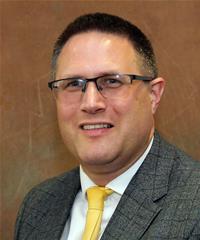
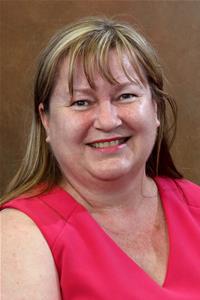
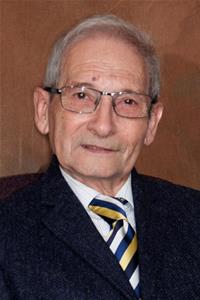
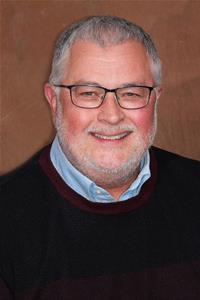
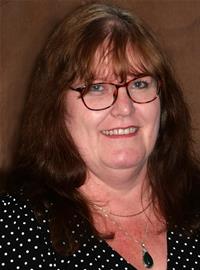
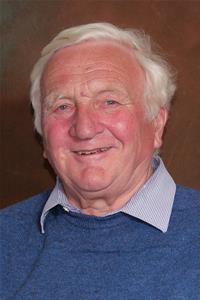
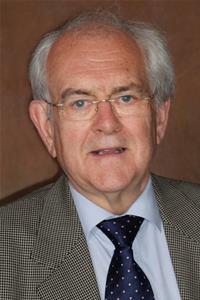
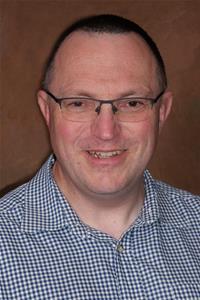
The committee was scheduled to approve the minutes of the previous meeting held on 25 June 2025. Attendees included Councillor DS Cope, Chair, Councillor R Webber-Jones, Vice-Chair, and Councillors CM Allen, REH Flemming, E Hollick, C Lambert, A Pendlebury, MJ Surtees, P Williams, and RG Allen. The minutes reflect that the committee:
- Noted the External Audit Plan 2024/25.
- Noted the Leisure Centre - Internal Audit final report.
- Noted the IT Asset Management Leicestershire ICT Partnership 23/24 - Internal Audit final report.
- Noted the Waste Management 2024/25 - Internal Audit final report.
- Noted the Internal Audit Progress report.
- Noted the Audit Committee Self-Assessment Action Plan - update, and agreed to re-assess the scores given as part of an updated self-assessment to be reported at the next meeting.
- Approved the Audit Committee forward plan as a working document.
Attendees





Topics
No topics have been identified for this meeting yet.
Meeting Documents
Additional Documents