Limited support for Hampshire
We do not currently provide detailed weekly summaries for Hampshire Council. Running the service is expensive, and we need to cover our costs.
You can still subscribe!
If you're a professional subscriber and need support for this council, get in touch with us at community@opencouncil.network and we can enable it for you.
If you're a resident, subscribe below and we'll start sending you updates when they're available. We're enabling councils rapidly across the UK in order of demand, so the more people who subscribe to your council, the sooner we'll be able to support it.
If you represent this council and would like to have it supported, please contact us at community@opencouncil.network.
Extraordinary County Council - Wednesday 24 September 2025 10.00 am
September 24, 2025 Extraordinary County Council View on council website Watch video of meetingSummary
Open Council Network is an independent organisation. We report on Hampshire and are not the council. About us
The Hampshire County Council is scheduled to meet on Wednesday 24 September 2025 to discuss devolution, local government reorganisation, and investment pooling for the Local Government Pension Scheme. The potential creation of a Mayoral Combined County Authority for Hampshire and the Solent will be a key topic, as well as the council's final proposal for local government reorganisation. Also on the agenda is how the council will manage its investments for the Local Government Pension Scheme.
Devolution and the Hampshire and the Solent Mayoral Combined County Authority (MCCA)
The council will be considering a report updating them on the proposed Mayoral Combined County Authority (MCCA) for Hampshire and the Solent, which is expected to be established in 2026. The report includes discussion of a draft Statutory Instrument and the English Devolution and Community Empowerment Bill, which outline the terms and conditions of devolution.
The report identifies some key implications for Hampshire County Council, including the transfer of strategic transport responsibilities to the MCCA, and the movement of some government-funded programmes, mainly in the areas of Economy and Skills, to the MCCA within its first year.
One of the main concerns outlined in the report is the governance and financial liability detailed in the draft Statutory Instrument. Hampshire County Council will be one of four Constituent Members of the MCCA, with two votes allocated to it, while the other councils and the Mayor each hold one vote. This results in the County Council having 33% of the voting influence, but it would bear 70% of any financial liability not covered by other sources, due to its larger population. The report states that:
This means that the County Council has 33% of the influence but 70% of the liability, which creates significant risk for the County Council for the period between the establishment of the MCCA and local government reorganisation, where constituent councils with better balanced populations are likely to be created. It should also be noted that the risks would be ongoing indefinitely if local government reorganisation is not implemented.
The documentation includes a recommendation that Councillor Nick Adams-King, Leader of the Council, be authorised to submit the council's final business case for Local Government Reorganisation jointly with East Hampshire District Council to the government. It is also recommended that the council delegate authority to the Chief Executive, Gary Westbrook, in consultation with Councillor Nick Adams-King, to approve any minor amendments to the business case that may be required, ensuring timely submission, and to submit the council's response to the government's public consultation on Local Government Reorganisation in the Hampshire and the Solent area.
The report also notes that it will be necessary for the cabinet to meet again once details of the financial settlement and the position on risk mitigation have been established to delegate authority to the Chief Executive, in consultation with the Leader of the Council, to agree the final form of the Statutory Instrument creating the MCCA and to consent to the creation of the MCCA if, in the opinion of the Chief Executive, the finance and governance principles set out in this Report are accurately reflected in the final Statutory Instrument.
The report also recommends that Natalie Brahma-Pearl, Returning Officer and Chief Executive at Portsmouth City Council, is appointed as the Combined County Authority Returning Officer (CCARO) for the 2026 mayoral elections. The CCARO will have personal responsibility for the administration of the poll and will coordinate delivery of the poll with Local Returning Officers in each of the fourteen local authority areas. The CCARO's duties also include the preparation, printing and postage of an Election Address Booklet to all registered electors in the combined county authority area.
Local Government Reorganisation
The council will also be considering a report from the Chief Executive which sets out the work undertaken to develop a final Business Case forming the council's submission to government regarding Local Government Reorganisation. In July 2025, the cabinet approved Option B2, proposing the creation of four unitary authorities (UAs): North and Mid (Basingstoke and Deane, East Hampshire, Hart, Rushmoor, Winchester), West (Eastleigh, New Forest, Southampton, Test Valley), South-East (Fareham, Gosport, Havant, Portsmouth), and the Isle of Wight as a standalone authority. This model, referred to as 4UA: B2, was identified as the most effective in delivering a simpler, stronger, and secure future for the Area, aligning with government criteria and County Council principles.
The report states that financial modelling, supported by PwC, demonstrated that alternative five-unitary models lack viability due to insufficient scale and increased fragmentation risks. In contrast, 4UA: B2 balances scale with localism, enabling high-quality service delivery and financial sustainability. It preserves nationally recognised services, such as Children's Services and Adults' Health and Care, and avoids the disruption of creating new greenfield authorities.
The report also states that extensive engagement with over 3,500 residents and stakeholders, including a representative survey, revealed strong support for simplification, improved services, and neighbourhood empowerment. Strategic partners, including Hampshire and Isle of Wight Constabulary, favoured the 4UA: B2 structure for its operational coherence and alignment with existing service areas.
The report states that neighbourhood empowerment is central to the proposed governance model, guided by six principles: community strengths, local practices, partnerships, inclusive engagement, resilience, and long-term planning. The Local Voices, Lasting Change report outlines a vision for inclusive governance and deeper democratic engagement, ensuring councils remain connected to communities regardless of size.
The model also enhances democratic accountability by reducing councillor numbers from 650 to approximately 324, streamlining governance while maintaining robust representation. Collaboration with the Local Government Boundary Commission for England has informed a scalable framework, proposing around 95 councillors per mainland UA.
4UA: B2 supports regional strategic growth and devolution ambitions, aligning with economic geography and commuter patterns. It offers efficiencies in back-office functions while retaining local knowledge and responsiveness. Strategic partners across sectors endorse the model for its consistency and reduced fragmentation.
Preparations for transition are underway, including strategic workshops and learning from previous LGR programmes. Pending Parliamentary approval of the Structural Changes Order (SCO), a transition body will oversee implementation from autumn 2026 to Vesting Day on 1 April 2028. During this period, existing councils will maintain services while preparing for handover, ensuring continuity and minimising disruption.
Local Government Pension Scheme (LGPS) Investment Pooling
The council will also be considering a report of the Pension Fund Panel and Board on Government's requirements for the management of investments for the Local Government Pension Scheme.
The 'Fit for the Future' consultation was published by the government on 14 November 2024.
Within this document, the government outlined four minimum standards
expected of all investment pools by March 2026:
- Authorities to delegate implementation of investment strategy to their pool
- Authorities to take their principal advice on their investment strategy from the pool
- Authorities to transfer legacy assets to the management of the pool
- Pools required to be investment management companies authorised and regulated by the Financial Conduct Authority (FCA), with the expertise and capacity to implement investment strategies.
The proposals represent a significant increase in the requirements for investment pooling, particularly for the ACCESS pool (which the Hampshire Pension Fund is a member of) which is one of three of the eight existing pools that do not have an existing FCA regulated company.
The government set a deadline of 28 February 2025 for all pools to submit proposals for how they would meet the new requirements; either through their existing or new FCA regulated companies, or through choosing to merge with another pool. ACCESS submitted detailed proposals to the government for how it would meet the requirements by creating its own FCA regulated company.
On 9 April 2025, the government responded to each pool's proposals. Both ACCESS and Brunel were told that their 'proposals do not meet the Government's vision for the future of the LGPS' and the participating authorities in each pool (including Hampshire) were 'invited… to consider and identify which pool you wish to partner with going forward'. The government has set an expectation that authorities should make 'a decision in principle' on the new pool that they wish to join by 30 September 2025.
On 29 May 2025, the government responded to the 'Fit for the Future' consultation, confirming the proposals for pooling that were made in November 2024 and outlining that in the forthcoming Pensions Bill it would take new powers 'in order to ensure the process of moving from eight LGPS pools to six does not result in any [authority] being left without a pool, and to protect the scheme in the long term, the Government will take a power in the Pension Schemes Bill to direct an [authority] to participate in a specific pool'.
It was reported to the Pension Fund Panel and Board in July 2025 that despite the ACCESS pool's attempt to work collectively to find a new pool to merge with, there was not a consensus about the preferred new pool to join amongst the 11 partner funds. The Panel and Board heard that following the officers' evaluation, joining LGPS Central was Hampshire's preferred option for a new investment pool and agreed to delegate to the Director of Corporate Operations, in consultation with the Chairman of the Panel and Board, to finalise Hampshire's options appraisal with advice from the pensions consultants Hymans Robertson. If the final evaluation showed LGPS Central as Hampshire's preferred option, the Director should submit a Declaration of Interest and sign a Memorandum of Understanding to join the new pool.
At its meeting on 5 September 2025, the Director reported to the Panel and Board the advice received from Hymans Robertson confirming Hampshire's finalised evaluation concluding that LGPS Central remained the best option for a new investment pool. Hampshire's evaluation and the previous proposal for ACCESS to form its own FCA regulated company, considered in detail the costs of these changes to the investment pooling model, which have been discussed in detail by the Panel and Board. The Panel and Board were told that using the authority the committee had agreed, the Director sent Hampshire's Declaration of Interest to join LGPS Central at the end of July 2025. After considering the relevant information, the Panel and Board endorsed LGPS Central as the preferred new pool to join.
Alongside Hampshire, all the ACCESS authorities have also confirmed their own preferences for a new pool and submitted their declarations of interest to either Borders to Coast or LGPS Central.
The separation and cessation of the ACCESS pool will require amending existing and agreeing new legal documents including ACCESS's Inter-Authority Agreement. These are being discussed by the Monitoring Officers of the 11 ACCESS authorities to agree the necessary changes.
The government's timeline for the implementation of its new model for LGPS investment pooling set out in its 'Fit for the Future' consultation was the end of March 2026. To meet this timescale, Hampshire will need to have formally joined LGPS Central by becoming a shareholder of the company and appoint LGPS Central to manage Hampshire's investments. Hampshire will need to sign a Shareholder Agreement to become a shareholder in LPGS Central and an Investment Management Agreement (IMA)/Client Agreement for LGPS Central to manage Hampshire's investments.
The Shareholder Agreement will contain key provisions such as the amount of capital that shareholders will need to provide for the Financial Conduct Authority (FCA) regulated company, how the company's activities will be managed through its Business Plan and Budget and how shareholders make decisions, whether by unanimous vote or a majority. As part of the Shareholder Agreement, Hampshire will also need to appoint a Shareholder Representative to exercise Hampshire's rights set out in the Shareholder Agreement. Existing and new partner funds and LGPS Central will need to work together to clarify the requirements for Shareholder Representatives and any other appointees.
The IMA/Client Agreement will set out LGPS Central's obligations to Hampshire for the management of its investments and enable Hampshire to set key limits and controls for how it wants its investments managed. There will be some similarities to the IMAs that Hampshire would have previously agreed with external investment managers.
LGPS Central and its new partner funds will work to a programme plan to manage the actions required for the onboarding of new partners to ensure that they meet the requirements of the Government's 'Fit for the Future' model.
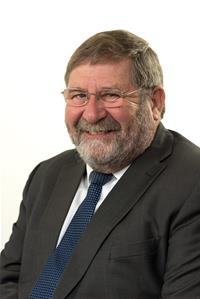
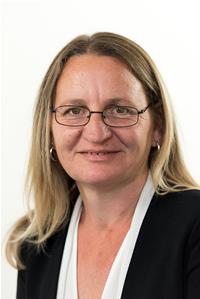
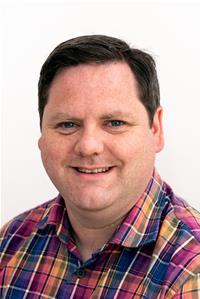
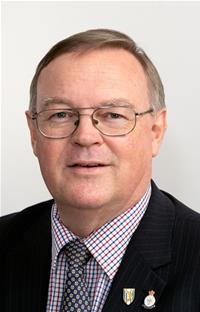
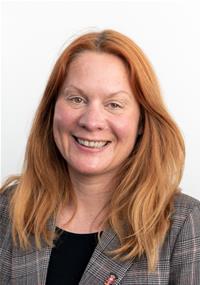
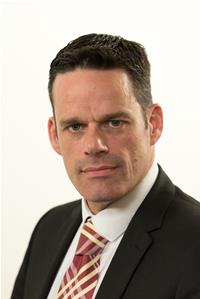
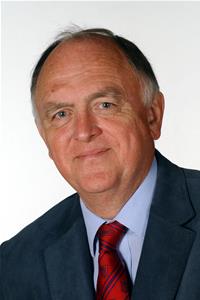
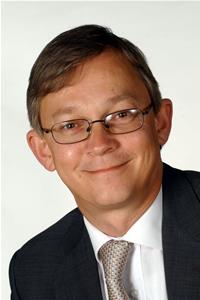
Attendees




























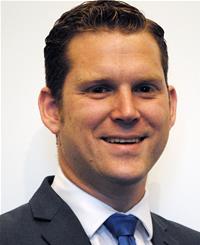

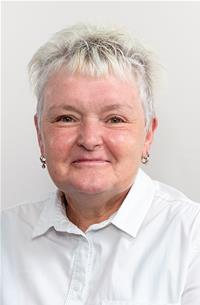

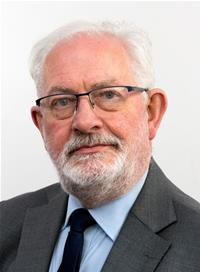


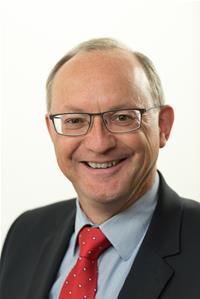










Topics
No topics have been identified for this meeting yet.
Meeting Documents
Additional Documents