Subscribe to updates
You'll receive weekly summaries about Hertfordshire Council every week.
If you have any requests or comments please let us know at community@opencouncil.network. We can also provide custom updates on particular topics across councils.
Cabinet - Wednesday, 22 April 2026 - 2.00 pm
April 22, 2026 at 2:00 pm Cabinet View on council websiteSummary
Open Council Network is an independent organisation. We report on Hertfordshire and are not the council. About us
The Cabinet of Hertfordshire Council met on Wednesday 22 April 2026, making the difficult decision to close two primary schools, Albury Church of England VA Primary School and St Nicholas Elstree Church of England VA Primary School, both effective from 31 August 2026, due to persistently low pupil numbers and financial unsustainability. The Cabinet also approved significant capital investment for new school places to support the Harlow and Gilston Garden Town development and adopted the Dacorum Local Cycling and Walking Infrastructure Plan.
Closure of Albury Church of England VA Primary School
Cabinet agreed to the statutory proposal to close Albury Church of England VA Primary School on 31 August 2026. Executive Member for Education, SEND and Inclusion, Mark Watkin, presented the proposal, highlighting the fundamental issue of declining pupil numbers and financial viability. Despite the school being rated 'Good' by Ofsted and having strong community support, the number of pupils has fallen to 11 from reception to Year 6, with only one reception pupil application for the following year, which was subsequently withdrawn. The council is statutorily obliged to ensure school provision reflects demand and that remaining schools are viable and deliver high-quality education. While acknowledging the school's importance to the village community, Cabinet members, including Deputy Leader Sally Symington, Executive Member for Adult Care Services, reluctantly agreed with the recommendation for closure, citing the need for an overarching view of education delivery across the entire county and the educational and financial risks associated with maintaining a school with such low pupil numbers.
Closure of St Nicholas Church of England VA Primary School, Elstree
Similarly, Cabinet unanimously approved the statutory proposal to close St Nicholas Elstree Church of England VA Primary School on 31 August 2026. Mark Watkin explained that the school, with a capacity for 210 pupils, currently has only 46 pupils, with surplus places in every year group. Despite improvements in standards, the proposed shift to two mixed-age classes covering seven year groups would strain curriculum delivery and educational quality. Concerns were raised about the transition for children with SEND, but the council expressed confidence that suitable alternative provision could be secured. The decision was made on the basis of persistently low pupil numbers, significant surplus capacity, and the impact on educational quality, balancing community impact with the duty to provide a stable, high-quality educational experience.
Update on Delivery of New School Places for Gilston Development
Cabinet agreed to authorise capital budgets for the delivery of new primary schools to serve the Harlow and Gilston Garden Town development. Executive Member for Education, SEND and Inclusion, Mark Watkin, outlined the partnership's aim to provide 16,000 new homes by 2033, requiring significant infrastructure investment, including for education. To ensure flexibility in responding to the phasing of residential delivery, Cabinet approved capital budgets of £18.53 million for a 3FE Primary School in Village 1 and an equivalent amount for a school in Village 7, funded by Section 106 developer contributions. This funding will allow the council to adapt to emerging needs, whether Village 1 or Village 7 is developed first. Councillor Chris Lucas, Executive Member for Resources and Performance, welcomed the proactive approach to ensuring schools are ready for new residents. Councillor Paul Zukowskyj, Executive Member for Environment, Transport and Growth, noted the challenges of infrastructure delivery with different developers but was pleased with the flexibility to deploy funding appropriately.
Dacorum Local Cycling and Walking Infrastructure Plan (LCWIP)
Cabinet adopted the Dacorum Local Cycling and Walking Infrastructure Plan (LCWIP). Executive Member for Environment, Transport and Growth, Paul Zukowskyj, introduced the plan, highlighting its importance in securing developer contributions for active travel infrastructure. Councillor Sally Symington, Deputy Leader of the Council and Executive Member for Adult Care Services, welcomed the plan, noting that it was the seventh district and borough in Hertfordshire to complete this work, which would help attract national funding for active transport and support safer routes to schools. Councillor Adrian England, Executive Member for Sustainability, also welcomed the plan, noting its potential to connect out-of-town railway stations with town and employment centres and support the e-bike scheme. Cabinet agreed to adopt the Dacorum LCWIP, subject to minor edits.
Approval of the Sustainable Hertfordshire Strategy Principles – Work Plan
Cabinet approved the Sustainable Hertfordshire Work Plan. Executive Member for Sustainability, Adrian England, presented the work plan, which flows from the strategy adopted in February. He emphasised that the new council leadership was making its mark by creating a more sustainable Hertfordshire, embedding sustainability across all council activities. Councillor Chris Lucas, Executive Member for Resources and Performance, welcomed the work plan, noting that strategies alone do not deliver results and that the work plan was crucial for progress. He also highlighted that sustainability is a cross-cutting responsibility, not solely that of the sustainability team.
Hertfordshire County Council Performance Monitor Q3 2025-2026
Cabinet noted the Hertfordshire County Council Performance Monitor for Q3 2025-26. Executive Member for Resources and Performance, Chris Lucas, presented the report, highlighting positive progress across the five priorities of the corporate plan. Key achievements included 81.5% of children and young people being placed within Hertfordshire, a 3.3% reduction in household waste per person, and a 785 increase in home safety and well visits year-on-year. Councillor Sally Symington welcomed progress on highways, particularly regarding speed management strategies and the introduction of 20mph zones, which she felt were long overdue. Councillor Anthony Rowlands, Executive Member for Children's Social Care, provided reassurance on initial child protection conferences, noting that while there had been a slip in meeting target times, the percentage had already begun to recover and action was being taken.
Future of Land at Highfield Farm, Tittenhanger
Cabinet agreed to declare the land at Highfield Farm, Tittenhanger, surplus to requirements and available for disposal. Executive Member for Resources and Performance, Chris Lucas, explained that the site comprised vacant land with redundant barns and storage buildings, no longer required by the council. The decision was made to dispose of the land to achieve a capital receipt, with terms of disposal delegated to the Deputy Chief Executive and Executive Director of Resources in consultation with the Executive Member for Resources and Performance.
Future of the Former Bill Everett Centre, Watford
Cabinet agreed to declare the former Bill Everett Centre in Watford surplus to requirements and available for disposal. Executive Member for Resources and Performance, Chris Lucas, stated that the site had been vacant since 2009 and was no longer required for educational use. The decision to dispose of the land to achieve a capital receipt was made, with terms of disposal delegated to the Deputy Chief Executive and Executive Director of Resources in consultation with the Executive Member for Resources and Performance. Councillor Mark Watkin, Executive Member for Education, SEND and Inclusion, expressed delight at the decision, noting the site's long period of disuse and the positive step towards new community development.
Future of Secure Tenancies
Cabinet delegated authority to the Deputy Chief Executive and Executive Director of Resources, in consultation with the Director of Finance and the Executive Member for Resources and Performance, to agree the terms of the disposal of the Council's thirty-five secure tenancies. Executive Member for Resources and Performance, Chris Lucas, explained that the Council is not a housing authority and these tenancies are non-operational. The aim is to move them to an organisation better positioned to manage them, ensuring tenants' rights are protected. Councillor Sandy Walkington, Executive Member for Adult Care Services, emphasised the importance of finding an appropriate housing provider that offers quality and support, and expressed hope that tenants would see an uplift in services.
Approval of the Strategic Asset Management Plan 2025-2029
Cabinet approved the contents and implementation of the new Strategic Asset Management Plan (SAMP) 2025-2029. Executive Member for Resources and Performance, Chris Lucas, presented the plan, highlighting the significant portfolio of around 2,000 assets valued at over £3 billion, generating approximately £19 million in annual income. He stressed the importance of managing these assets strategically, particularly in light of the council's £40 million deficit. Councillor Adrian England, Executive Member for Sustainability, welcomed the plan, comparing it to Martin Lewis's advice on preparing for a journey by removing unnecessary burdens. Councillor Mark Watkin, Executive Member for Education, SEND and Inclusion, agreed with the need for strategic management, criticising the previous administration's approach to holding onto assets without a long-term plan. The plan aims to ensure assets either enable service delivery, provide community benefit, or generate income, and if they do not meet these criteria, they should be carefully reviewed.
The meeting concluded with the Cabinet agreeing the plan and thanking participants.
Delegated decisions linked to this meeting
Decision summaries below are AI-generated from the council’s published record. Check the council source or the full decision page before relying on them.
-
Minutes - Part II
Recommendations Approved (subject to call-in)
Attendees
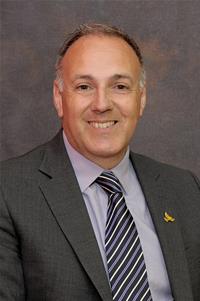


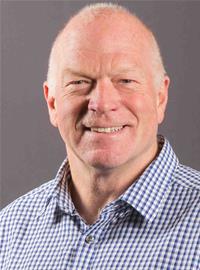


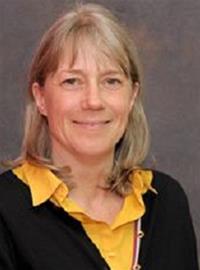
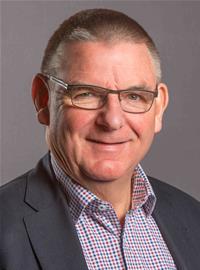

Topics
Meeting Documents
Additional Documents