Subscribe to updates
You'll receive weekly summaries about Croydon Council every week.
If you have any requests or comments please let us know at community@opencouncil.network. We can also provide custom updates on particular topics across councils.
Cabinet - Wednesday, 11th February, 2026 6.30 pm
February 11, 2026 at 6:30 pm Cabinet View on council websiteSummary
Open Council Network is an independent organisation. We report on Croydon and are not the council. About us
The Cabinet meeting on 11 February 2026 saw the approval of the Community Safety Strategy for 2026-2029, the continuation of the Holiday Activities and Food Programme until 2029 with confirmed government funding, and the adoption of the 2026-27 Budget and Medium-Term Financial Strategy. Key decisions also included an increase in HRA rents by 4.8% for 2026-27, the approval of the HRA Business Plan and Budget Update, and the adoption of the Capital Programme Strategy for 2025-31 and the Treasury Management Strategy Statement for 2026-27. Finally, the Cabinet agreed the Dedicated Schools Grant (DSG) Schools Funding for 2026-27, including formula factors and budget approval.
Community Safety Strategy Approved
The Cabinet has approved the Safer Croydon Partnership: Community Safety Strategy for 2026-2029, recommending its adoption and implementation by Full Council. This strategy builds on tangible improvements seen over the last four years, including a 4.1% fall in total recorded crime and significant reductions in knife crime and personal robbery. Key priorities include tackling violence against women and girls, making Croydon safer for young people, and focusing resources on high-priority neighbourhoods to reduce crime and anti-social behaviour. The strategy emphasizes partnership working with the police, probation service, fire brigade, and health agencies, and incorporates feedback from residents through the Community Safety Engagement Board.
Holiday Activities and Food Programme Extended to 2029
Croydon's Holiday Activities and Food (HAF) Programme will continue through to 2029, backed by confirmed government funding of nearly £4.84 million over three years. The programme, which has supported over 30,000 children since 2019, will receive £1,655,340 in 2026-27, with funding reducing slightly in subsequent years. The Cabinet agreed to delegate authority to the Corporate Director for Children, Young People and Education, in consultation with the Executive Mayor, to manage funding allocations and award grant agreements to successful applicants. The programme will focus on increasing engagement among underrepresented groups, enhancing provision quality, and aligning with national school-age wraparound childcare priorities.
Budget 2026-27 and Medium-Term Financial Strategy Approved
The Cabinet has approved the budget proposals for 2026-27 and the Medium-Term Financial Strategy (MTFS) through to 2030, recommending them for approval by Full Council. The budget includes a 4.99% increase in Council Tax, incorporating the Adult Social Care precept. Significant savings of £34 million are proposed for 2026-27, rising to £45.7 million by 2029-30, supported by the Future Croydon Transformation Programme. The Council is requesting Exceptional Financial Support (EFS) from the Government, in the form of a Capitalisation Direction, of up to £119 million for 2026-27, decreasing to £69 million by 2029-30. The report highlights the Council's improved financial position since 2022, but acknowledges the significant challenge of managing historic debt and rising demand for services.
HRA Rent Setting for 2026-27 Approved
Social rents for Council homes in Croydon will increase by 4.8% from April 2026, in line with the Government's Social Housing Rent Policy (CPI plus 1%). This increase, estimated to generate an additional £4.35 million in income for the Housing Revenue Account (HRA) in 2026-27, is necessary to support ongoing investment in the Council's housing stock. Tenant service charges, garage rents, and parking spaces will also see a 4.8% increase. The HRA Hardship Fund will continue to operate, subject to Secretary of State approval, to assist tenants financially impacted by the rent increase but not in receipt of other benefits. The Cabinet also noted the continuation of the Social Rent Policy flexibility, allowing for additional charges on relets.
HRA Business Plan and Budget Update 2026-27 Approved
The Cabinet has agreed to recommend to Full Council the HRA budget for 2026-27, including the HRA capital programme, and has approved the HRA 30 Year Business Plan. This plan demonstrates that the investment proposals are fundable and that the HRA remains sustainable over the 30-year period, based on current data. The plan incorporates significant capital investment for major repairs, building safety, compliance works, and acquisitions, including the redevelopment of Regina Road estate. The strategy acknowledges the financial pressures of inflation and rising costs, but aims to maintain investment in improving homes and estates.
Capital Programme Strategy and General Fund Capital Programme for 2025-31 Approved
The Cabinet has agreed to recommend to Full Council the Council's 2025-31 General Fund Capital Programme, totalling £874.1 million, which includes capitalisation directions of £543.1 million. This expenditure will be financed through borrowing of £682.8 million over the six years. The Cabinet also approved the Council's Capital Strategy for 2026-27. The programme prioritises statutory compliance, asset safety, value for money, and long-term sustainability, with significant investment planned for town centre regeneration, public realm, education infrastructure, SEND provision, highways, transport, parks, and digital and property assets. External funding sources are being maximised to reduce reliance on borrowing.
Treasury Management Strategy Statement, Minimum Revenue Provision Policy Statement and Annual Investment Strategy 2026-27 Approved
The Cabinet has approved the Treasury Management Strategy Statement, Minimum Revenue Provision Policy Statement, and Annual Investment Strategy for 2026-27, recommending them for approval by Full Council. These documents provide the framework for managing the Council's borrowing, investment, and risk, ensuring public money is handled prudently and transparently. The strategy reflects a focus on sustaining the Council's debt responsibly and managing risk in an uncertain economic climate. Investment activity will remain cautious, prioritising security and liquidity. The report also notes that the Council's capital financing requirement has been impacted by IFRS 16 accounting treatment for leases.
Dedicated Schools Grant (DSG) Schools Funding 2026-27 Formula Factors Approved
The Cabinet has approved the provisional funding formula factors for Croydon mainstream schools for the financial year 2026/27, in line with the recommendations voted by Schools Forum. This ensures school funding decisions are made within a stable, transparent, and nationally compliant framework. The Cabinet also supported the Schools Forum's approval of a £1.2 million transfer from the Schools Block to the High Needs Block to support the DSG deficit management plan. The provisional Schools Block allocation for 2026/27 totals £352 million, with £348 million to be distributed directly to mainstream schools, an increase of £9.8 million compared to the previous year.
The meeting also included the confirmation of minutes from the previous meeting and disclosures of interest, with no urgent business items raised. Councillor Leila Ben-Hassle, Chair of Scrutiny, provided feedback on the Scrutiny Overview Committee's findings regarding the proposed budget and the Community Safety Strategy.
Delegated decisions linked to this meeting
Decision summaries below are AI-generated from the council’s published record. Check the council source or the full decision page before relying on them.
-
Community Safety Strategy
Recommendations Approved...noted the key themes of the proposed Safer Croydon Partnership: Community Safety Strategy for 2026-2029 and recommended its adoption and implementation by Full Council.
-
Holiday Activities and Food Programme 2026-2029
Recommendations Approved...approve the acceptance and allocation of Department for Education funding for the Holiday Activities and Food Programme 2026–2029, and delegate authority for delivery arrangements to ensure borough-wide access and impact.
-
HRA Rent Setting 2026-27
Recommendations Approved...to agree a 4.8% increase in social rents and associated tenant service charges, along with garage rents, parking spaces, and caravan site plot charges, effective from April 2026, and to continue the HRA hardship fund.
-
Budget 2026-27 and Medium Term Financial Strategy 2026-30
Recommendations Approved... approved the budget proposals and council tax proposals for the Budget 2026-27 and Medium Term Financial Strategy 2026-30, recommending them to Full Council for approval.
-
Treasury Management Strategy Statement, Minimum Revenue Provision Policy Statement and Annual Investment Strategy 2026-27
Recommendations Approved...approved the Treasury Management Strategy Statement, Minimum Revenue Provision Policy Statement, and Annual Investment Strategy for 2026-27, recommending these to Full Council for their consideration and approval.
-
Capital Programme and Strategy for 2025-31
Recommendations Approved...the Council's 2025-31 General Fund Capital Programme and the 2026-27 Capital Strategy were recommended for approval by Full Council.
-
HRA Business Plan and Budget Update 2026-27
Recommendations Approved...recommend to Full Council to agree the Housing Revenue Account (HRA) budget for 2026-27, including the HRA capital programme, and to agree the HRA 30 Year Business Plan based on that budget.
-
Dedicated Schools Grant (DSG) Schools Funding 2026 2027 Formula Factors
Recommendations Approved...approved the provisional funding formula factors for Croydon mainstream schools for the financial year 2026/27, approved the statutory spend of £348.07m of Schools Block DSG funding for 2026/27, and supported the transfer of £1.2m from the school's block to the High Needs block as part of the DSG Deficit Management Plan.
Attendees
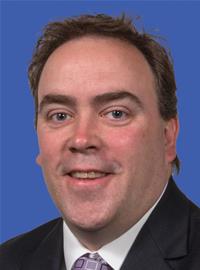

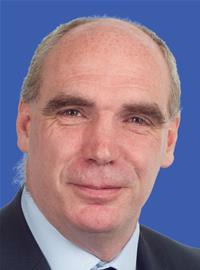





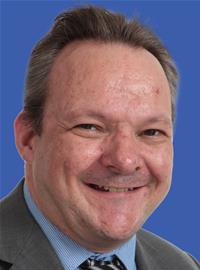
Topics
No topics have been identified for this meeting yet.
Meeting Documents
Reports Pack